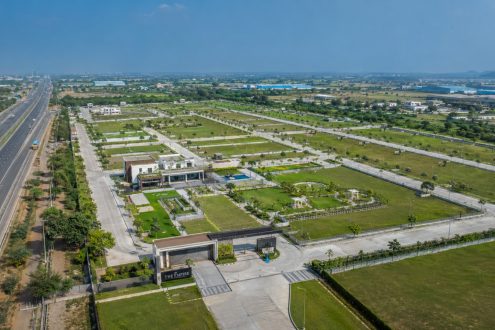

GURUGRAM’S EMERGING PLANNED CORRIDOR: HSVP’S 196-ACRE ARAVALI-ADJACENT VOLUNTARY LAND POOLING SECTOR
07/14/2026
www.ssestateanalytica.com | +91 97181 11251
An Analytical Study on Statutory Layout Norms, Shadow Market Effects on Sectors 77-80, and the Asymmetric 5/7/10-Year Gestational Investment Edge
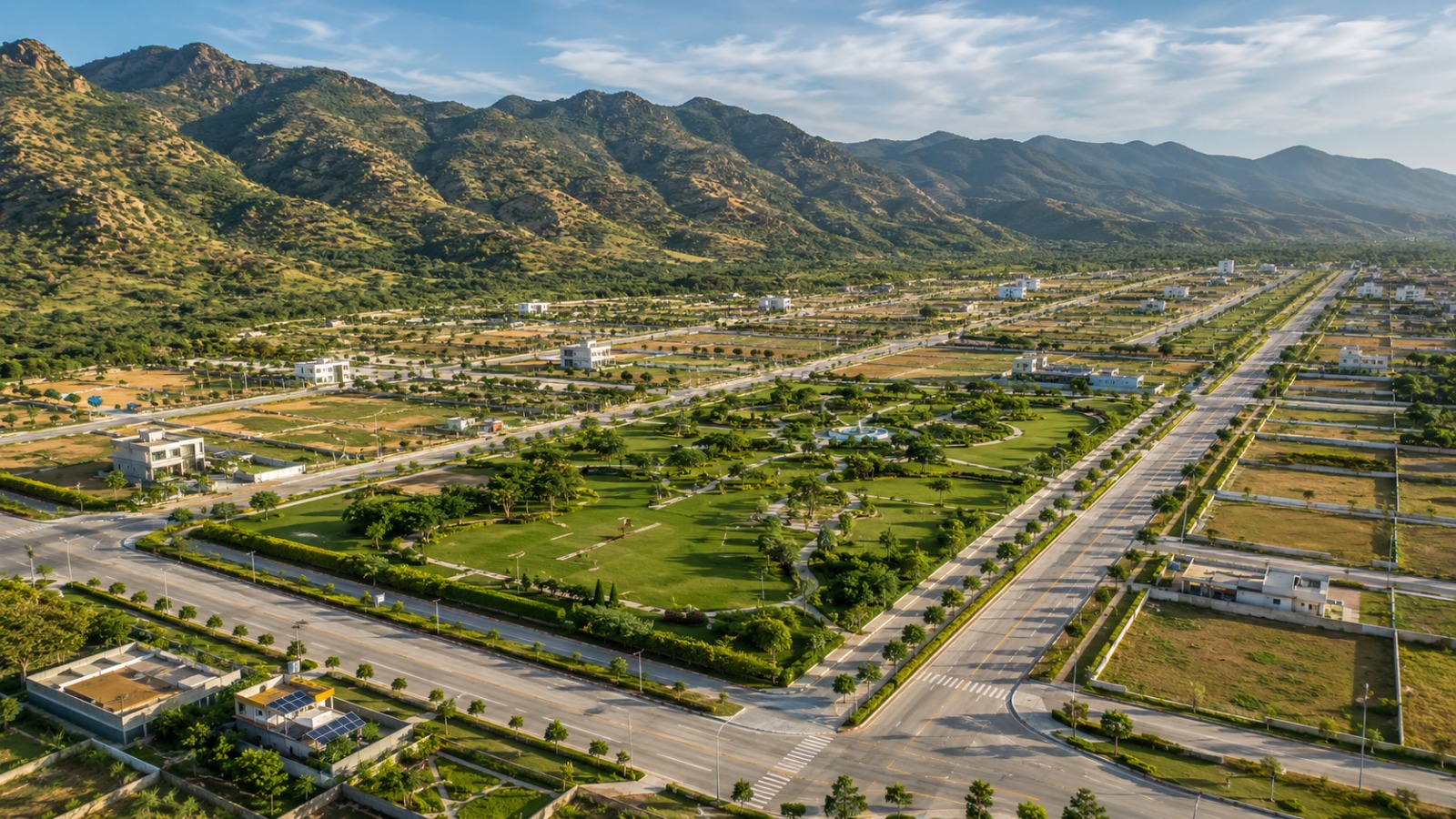
The Haryana Shahari Vikas Pradhikaran (HSVP) has initiated a significant expansion of Gurugram’s planned urban boundary. Landowners spanning eight key rural zones—led by a substantial 107-acre contiguous anchor offering in Shikohpur along the Delhi-Jaipur Highway (NH-48)—have voluntarily stepped forward under the state’s e-Bhoomi portal framework to pool approximately 196 acres of land for a new government-planned residential sector positioned near the Aravali foothills. This structural accumulation is not an isolated development; it marks the return of state-led planned urbanization, forming the opening phase of HSVP’s broader master plan to develop nearly 17,000 acres of infrastructure-first urban extensions across the Gurugram district.
Our strategic planned corridor report indicates that this initiative opens up a highly specialized entry window for long-term wealth portfolios. Unlike typical private developer layouts that maximize density, this classic HSVP sector layout operates under strict statutory limits: reserving a massive 55% of the total land bank exclusively for wide transit roads, public utilities, open green belts, and civil infrastructure, leaving only ~45% as saleable area. While this layout ensures high long-term livability, it also demands a realistic investment horizon. This advisory deep-dives into the operational layers of the new pooling model, charts the resulting shadow market effects radiating across adjacent Sectors 77–80 and the Manesar extended area, and outlines the data-driven framework showing why disciplined 5/7/10-year gestational holds are required to capture true alpha along this emerging urban edge.
📥 Quick Strategy Download:
Short on time? Instantly receive the complete unedited printout copy of this entire urban planning study, “SS_Estate_Analytica_HSVP_196_Acre_Pooling_Analysis_2026.pdf”, sent directly to your WhatsApp.
💬 Request Full Land Pooling PDF via WhatsAppGurugram’s breakneck urban evolution over the past two decades has been defined by premium private developments along high-velocity transit ribbons like the Dwarka Expressway, often running parallel to infrastructure lags and complex environmental disputes near the Aravali range. HSVP’s e-Bhoomi land pooling model represents a strategic shift back to organized, state-driven development designed to remove litigation friction by replacing compulsory acquisition with market-linked mutual consent.
The proposed sector footprint occupies a distinct geographic alignment in the western and southern expansion zones of Gurugram, creating an independent growth node that complements core city centers.
The structural announcement of a 196-acre government-planned sector sends clear, immediate shadow market signals across surrounding micro-markets long before the first bulldozer arrives on site:
| Target Impact Zone | Positive Market Shadow Effect | Cautionary Market Shadow Effect |
| Sectors 77-80 & Shikohpur | Immediate asset price re-rating; infrastructure spillover anticipation; rising buyer inquiry volumes. | Future secondary market competition from incoming government plotted inventories. |
| Manesar Extended Area | Reinforced regional growth narrative; stronger ecosystem integration with nearby industrial employment hubs. | Minimal direct spatial overlap; functions more as a complementary residential pocket than a competitor. |
| Dwarka Expressway Luxury | Adds positive momentum to Gurugram’s broader planned supply story and overall market credibility. | Minimal direct impact; targets a completely different buyer profile, pricing bracket, and development timeline. |
| Existing Aravali-Foothill Pockets | Potential for a premium “green view” valuation boost if nearby public green belts are maintained smoothly. | Risk of extended environmental reviews; heightened administrative scrutiny on construction close to foothills. |
New planned government sectors featuring complex environmental overlays follow a highly predictable value creation curve. Trying to trade or flip properties within a short window along this peripheral green belt is a high-risk approach that regularly backfires.
  [0 - 12 MONTHS] ──► ANNOUNCEMENT: HSVP HQ approvals, landowner talks, early sentiment lift.
  [12 - 36 MONTHS] ──► PLANNING: Land acquisition completion, master blueprints, Aravali clearances.
  [36 - 72 MONTHS] ──► INFRASTRUCTURE: Roads, drainage, green belts, initial plot inventory release.
  [6 - 8+ YEARS]   ──► POSSESSION: First structural handovers, trading velocity rises, prices stabilize.
  [8 - 12 YEARS]   ──► MATURITY: Complete civic setup, high rental absorption, compounding compounding alpha.
A significant portion of investor disappointment in emerging real estate corridors stems from a basic mismatch between holding expectations and structural project realities. Applying a rapid 3-to-5 year flipping mindset to an early-stage government land-pooling sector leads straight into the classic “trapped capital” scenario.
At SS Estate Analytica, we do not chase market hype or push single developments. We are a proptech advisory partner committed to intellectual honesty regarding holding periods, regulatory risks, and actual infrastructure timelines.
For a balanced wealth portfolio, we advise treating this emerging Aravali-adjacent planned sector as a highly strategic 15% to 25% complementary diversification sleeve. This allocation should sit alongside your high-liquidity, near-possession core residential holdings in mature corridors like the Dwarka Expressway. By balancing fast-cycle, income-generating premium assets with longer-cycle, high-alpha public plotted ground layers, private portfolios capture ideal protection against inflation and maximum long-term compounding growth.
This specialized urban planning analysis and shadow market report has been clean-compiled by the Research & Strategy Team of SS Estate Analytica under the leadership of Mr. Manish Kumar, Business Head, solely for educational, strategic research, and digital distribution workflows. It does not under any scenario, market phase, or jurisdiction constitute certified financial planning, formal tax or legal advisory, a certified real estate appraisal mandate, or a direct solicitation to trade property inventory. Land pooling initiatives are fundamentally subject to final bilateral landowner negotiations, government notifications, changes in state urban housing policy, variations in developer acquisition economics, and macro-economic shifts. Forward-looking appreciation timelines, 5/7/10-year gestational indices, and shadow price trends are analytical hypotheses built on mid-2026 urban planning metrics and do not serve as an absolute promise or guarantee of future capital re-ratings or liquidity conversions. All technical boundaries and parcel metrics are gathered from public e-Bhoomi and HSVP filings accurate as of July 2026; property allocators are strictly required to perform thorough independent due diligence before entering binding asset agreements.
Contact: Manish Kumar
Business Head, SS Estate Analytica
📞 +91 97181 11251
📍 Headquarters: Gurugram, Delhi-NCR | RERA Registered Real Estate Intelligence & Advisory Firm
Specializing in Government Land Pooling Trackers, Statutory Layout Audits, Regulatory Clearance Projections, Shadow Market Impact Modeling, and Long-Term HNI Wealth Sourcing.
© 2026 SS Estate Analytica. All Rights Reserved. Strictly Confidential.
Access the unedited downloadable digital document printout of the complete side-by-side e-Bhoomi parcel maps, environmental clearance tracking schedules, and comparative gestational yield projections sent straight to your WhatsApp.
💬 Request Full Gestational Analysis PDF via WhatsApp